
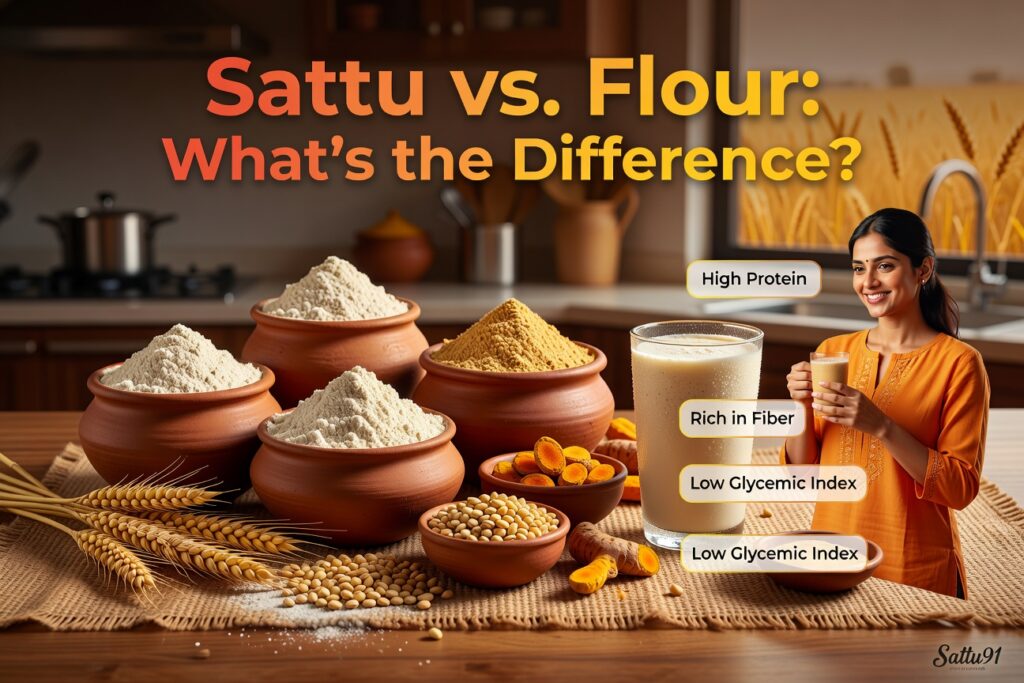
Comparing Sattu brands is essential for Indian consumers looking to make informed choices for their dietary needs. With numerous options available, it can be challenging to discern which Sattu offers the best nutritional benefits and value for money. In this article, we will analyze four popular Sattu brands to help you make the best decision for your health and cooking needs.
| Brand | Price/kg | Protein per 100g | Organic/Conventional | Packaging | Availability | Overall Rating |
|---|---|---|---|---|---|---|
| Miltop | ₹150 | 22g | Conventional | 1 kg pouch | Online | 4/5 |
| MDHills | ₹170 | 20g | Organic | 500g pouch | Online, Retail | 3.5/5 |
| Sattu91 | ₹199 | 25g | Organic | 1 kg eco-friendly pouch | Online | 4.5/5 |
| Nature’s Gift | ₹160 | 21g | Conventional | 1 kg pouch | Online, Retail | 4/5 |
Price: ₹150/kg | Rating: 4/5
Miltop Sattu provides a smooth texture and earthy taste, making it versatile for various recipes. With 22g of protein per 100g, it is a good option for those looking to boost their protein intake. The packaging is user-friendly, available in 1 kg pouches.
Best For: Everyday cooking and nutritious drinks.
Price: ₹170/kg | Rating: 3.5/5
MDHills offers organic Sattu that is slightly coarser in texture and has a distinct flavor profile. It contains 20g of protein per 100g and is packaged in a smaller 500g pouch, making it ideal for occasional use.
Best For: Health-conscious consumers preferring organic options.
Price: ₹199/kg | Rating: 4.5/5
Sattu91 stands out with 25g of protein per 100g, making it the highest in protein content among the compared brands. Its eco-friendly packaging and fine texture suit various culinary applications, from shakes to parathas.
Best For: Fitness enthusiasts and health-focused meals.
Price: ₹160/kg | Rating: 4/5
Nature’s Gift offers a balanced protein content of 21g per 100g and is packaged in a 1 kg pouch. It has a pleasant taste and can be used in various recipes, appealing to both health and flavor seekers.
Best For: Versatile cooking and snacking.
To evaluate the Sattu brands, we conducted a series of tests using Sattu to prepare sharbat, paratha, and laddoos. We scored each brand based on taste, texture, nutritional content, and overall satisfaction. The scores were averaged to determine the overall rating for each brand.
Our top pick is Sattu91 due to its superior protein content, eco-friendly packaging, and versatility in cooking. It is the best choice for those who prioritize both nutrition and sustainability in their diet.
For more information, check out our articles on Chana Ka Sattu: Benefits and How to Use It and How to Make Sattu Sharbat: Refreshing Summer Drink.
Q1: What is the difference between Sattu and regular flour?
A1: Sattu is made from roasted pulses or grains, offering higher protein content and a unique flavor compared to conventional flour.
Q2: Can Sattu be used in baking?
A2: Yes, Sattu can be incorporated into baking recipes, adding nutritional value and a distinct taste to baked goods.
Q3: How should Sattu be stored?
A3: Store Sattu in a cool, dry place in an airtight container to maintain its freshness and prevent moisture absorption.
In summary, choosing the right Sattu can significantly impact your health and cooking experience. Based on our analysis, Sattu91 stands out as the best option for those seeking high protein content and quality. For the best Sattu products, visit Sattu91.com and elevate your culinary creations today!