
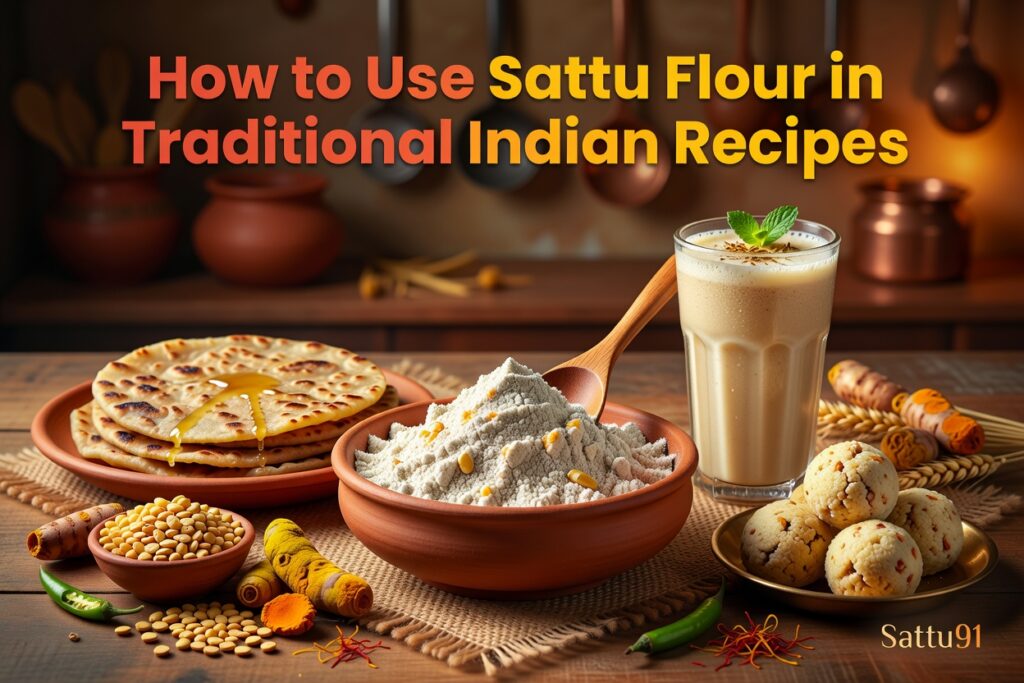
In this guide, you’ll learn how to use sattu flour effectively in your cooking and baking. Sattu, made from roasted gram flour, is not only nutritious but also versatile, making it an excellent addition to your diet. Understanding how to incorporate sattu flour can enhance your meals, boost your energy levels, and support a healthy lifestyle.
Start by measuring the desired amount of sattu flour you want to use, depending on the recipe you’re following or the serving size.
In a mixing bowl, combine the sattu flour with water or milk. Stir well to create a smooth, lump-free mixture. Pro tip: Use cold water or milk for a refreshing taste.
Add sweetener (like jaggery or honey) if you’re making a sweet dish, or salt for savory recipes. Mix thoroughly to combine.
Add any additional flavorings such as spices, fruits, or nuts. This will enhance the overall taste of your dish.
Allow the mixture to rest for about 5-10 minutes. This helps the flavors meld together and improves the texture.
Depending on your recipe, you can either cook the mixture (like in pancakes or porridge) or serve it raw (like in smoothies or energy balls).
Serve your dish warm or cold, depending on your preference. Enjoy the nutritious benefits of sattu flour!
A1: Yes, sattu flour can be used as a partial substitute for regular flour in various baking recipes.
A2: Yes, sattu flour is gluten-free, making it a great option for those with gluten sensitivities.
A3: Sattu flour can be stored in an airtight container in a cool, dry place for several months.
A4: Yes, sattu flour can be consumed raw, mixed with water or in smoothies.
Now that you know how to use sattu flour, start incorporating it into your meals for health benefits and delicious flavors. For more ideas on how to use sattu, check out The Best Ways to Use Sattu in Your Daily Meals and learn how to make Jau Sattu. Also, explore if sattu is good for weight loss to enhance your healthy lifestyle!